5 Frame Border Journal Template: A Practical Guide to Structured Visual Reflection
If you have ever sat down to journal only to feel overwhelmed by a blank page, you are not alone. Many adults want to develop a consistent journaling habit but struggle with where to begin or how to organise their thoughts in a meaningful way. The 5 Frame Border Journal Template offers a simple yet powerful structure that transforms open-ended reflection into a focused, visual exercise. Whether you are new to journaling or looking to deepen your practice, this template provides a repeatable framework that balances creativity with clarity.
What Is the 5 Frame Border Journal Template?
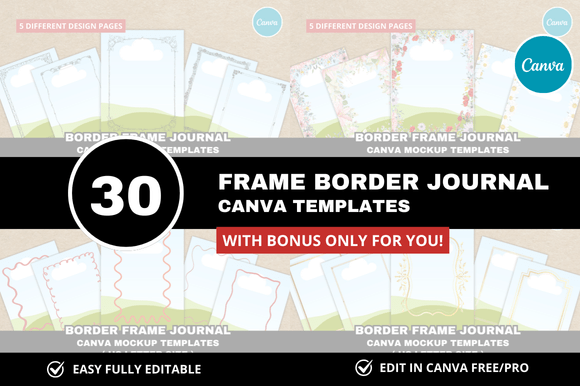
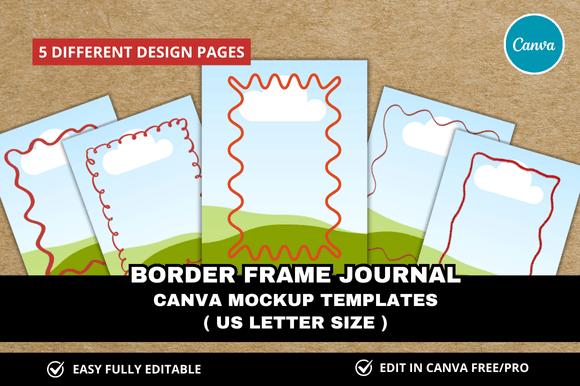
The 5 Frame Border Journal Template is a layout that divides a journal page into five distinct sections or "frames," each bordered or delineated to hold a specific type of content. Instead of writing freeform paragraphs, you populate each frame with a targeted response—such as a key insight, an emotion, a goal, a sketch, or a question. The border around each frame creates visual separation, making it easier to process information in bite-sized pieces.
This template borrows from concepts found in bullet journaling, mind mapping, and visual note-taking, but it simplifies them into a repeatable pattern. You can use it in a physical notebook, a digital app, or even on printable sheets. The core idea remains the same: each frame serves a purpose, and the borders keep your content organised without restricting your creativity.
Why Many Journalers Feel Stuck and How This Template Helps
One of the most common challenges adults face when journaling is the pressure to produce coherent, lengthy entries. Life is busy, and finding twenty minutes to write a detailed reflection is not always realistic. This pressure often leads to skipped days or abandoned journals. Another challenge is the tendency to repeat the same types of entries—gratitude lists, to-do notes, or venting—without gaining new perspective.
The 5 Frame Border Journal Template addresses these issues head-on by providing a clear, repeatable structure that takes only a few minutes to complete. Because each frame has a defined purpose, you are guided to cover multiple dimensions of your experience in a single session. This prevents tunnel vision and encourages a more balanced reflection. The framed layout also reduces the intimidation of a blank page, as you are not expected to write a continuous narrative. Instead, you fill in what matters most in each section.
Practical Applications and Real Outcomes
The beauty of the 5 Frame Border Journal Template is its adaptability. You can tailor the five frames to suit your current needs, goals, or challenges. Below are several common applications that demonstrate how different users get tangible results from this approach.
1. Daily Emotional Check-In
If you are working on emotional awareness or stress management, you can assign the five frames to capture different emotional data points. For example:
- Frame 1: One word that describes your overall mood
- Frame 2: A trigger or event that affected you today
- Frame 3: A physical sensation you noticed
- Frame 4: A thought that kept repeating
- Frame 5: One small action you took to care for yourself
This structure helps you move beyond simply naming emotions to recognising patterns. Over time, users report spotting recurring triggers and learning to respond rather than react.
2. Goal Tracking and Weekly Review
Professionals and entrepreneurs often use the template for weekly planning and review. Frames can be labelled:
- Frame 1: What went well this week
- Frame 2: What challenged me
- Frame 3: One lesson learned
- Frame 4: Priority for next week
- Frame 5: One thing I will do differently
This format keeps reviews concise and actionable. Instead of writing a lengthy recap, you extract the most valuable takeaways. Many users find that this weekly ritual improves accountability and helps them stay aligned with long-term objectives.
3. Creative Problem Solving
When facing a difficult decision or a creative block, the five frames can each hold a different perspective on the same problem. For instance:
- Frame 1: The problem stated in one sentence
- Frame 2: What I am avoiding or afraid of
- Frame 3: An ideal outcome
- Frame 4: One small step I can take today
- Frame 5: A question I still need to answer
This technique forces you to consider the problem from multiple angles without getting lost in circular thinking. Users often report that the act of framing each perspective physically on the page clarifies what was previously foggy.
4. Gratitude and Reflection Practice
For those focused on wellbeing, the template can serve as a structured gratitude journal. Frames might include:
- Frame 1: Something I appreciated today
- Frame 2: A moment of connection with someone
- Frame 3: Something I learned about myself
- Frame 4: A simple pleasure I noticed
- Frame 5: One thing I look forward to tomorrow
By varying the prompts, you avoid the monotony of listing the same types of gratitudes. The bordered frames encourage you to think broadly, covering relationships, self-discovery, sensory experiences, and anticipation.
How Different Users Approach the Template
One of the strengths of the 5 Frame Border Journal Template is that it accommodates different personalities and preferences. Here is how various users might adapt the same framework to their own style.
The Minimalist
Some people prefer simplicity and speed. A minimalist user might keep prompts to single words or short phrases. They may use a simple pen-and-notebook setup with no decorations. For them, the value lies in capturing essential thoughts without fuss. The borders provide just enough structure to stay on track.
The Visual Thinker
If you are someone who thinks in images, you can incorporate small sketches, icons, or doodles within each frame. The bordered sections naturally contain your drawings, making the page feel like a storyboard. Visual thinkers often find that this template helps them remember entries longer because the spatial layout reinforces the content.
The Habit Builder
For those focused on consistency, the template becomes a daily ritual. They might print or draw the five frames on each page in advance, so when it is time to journal, all they have to do is fill them in. This reduces friction and makes it easier to stick with the practice. Over time, the habit becomes automatic, and the template serves as a reliable container for reflection.
The Deep Reflector
Some users prefer to go deeper with each frame. They might write several sentences or even a short paragraph in each section. The borders help them compartmentalise their thoughts so that one topic does not bleed into another. This is especially helpful when processing complex emotions or decisions, because each frame acts as a separate container for a distinct line of thinking.
Recommendations for Getting Started
If you are ready to try the 5 Frame Border Journal Template, here are a few practical recommendations to set yourself up for success.
Start with a simple layout. Draw five rectangles or squares on a page, leaving enough room to write inside each. You can use a ruler for clean lines or freehand for a more organic feel. The borders do not need to be perfect; they just need to be distinct.
Choose prompts that matter to you. The template works best when the frames align with a current goal or challenge. If you are feeling scattered, use prompts that ground you. If you are working on a specific project, tailor the frames to that topic. Avoid using the same five prompts every day unless they continue to feel relevant.
Keep it short at first. A common mistake is trying to write too much in each frame. Aim for a few words or a single sentence per frame when you start. You can always expand later. The goal is to complete the page in five to ten minutes, so the practice feels sustainable.
Review your entries periodically. After a few weeks, flip back through your journal and look for patterns. Which frames are consistently easy to fill? Which ones feel forced? Adjust your prompts accordingly. The template is meant to serve you, not the other way around.
Experiment with digital options. If you prefer typing over handwriting, many note-taking apps allow you to create a grid or table that mimics the five-frame layout. Tools like Notion, OneNote, or even a simple drawing app can work well. The principle remains the same: each frame holds one focused response.
Important Considerations for Long-Term Use
While the 5 Frame Border Journal Template is flexible, there are a few considerations to keep in mind to avoid frustration.
Avoid overcomplicating the borders. Some users spend too much time decorating or perfecting the frames, which defeats the purpose of a quick, structured journaling session. Keep the visual design simple so that the content remains the focus.
Rotate your prompts regularly. Using the same five prompts for months can lead to robotic entries. Every few weeks, change at least two of the frames to keep the practice fresh. This also helps you explore new areas of reflection that you might otherwise neglect.
Be patient with yourself. If some frames feel empty on certain days, that is okay. Not every session needs to be profound. The template is a tool for consistency, not perfection. Over time, you will develop a rhythm that feels natural.
Respect your own style. If a particular frame category does not resonate with you, swap it out. The template is a starting point, not a rigid formula. The most effective version of the 5 Frame Border Journal Template is the one that you actually use and find helpful.
Moving Forward with Purpose
The 5 Frame Border Journal Template is more than just a layout—it is a method for turning unstructured thoughts into actionable insights. By giving each idea its own bordered space, you create mental clarity and reduce the friction that often kills journaling habits. Whether you use it for emotional check-ins, goal reviews, creative problem solving, or gratitude practice, the template adapts to your life rather than demanding that you adapt to it.
If you have been searching for a journaling approach that is both structured and flexible, this template is worth trying. Draw your five frames, choose your prompts, and give yourself permission to start small. The consistency you build will often matter more than the content of any single entry. Over weeks and months, those five frames become a powerful lens through which you see your own growth more clearly.